



Release management is supposed to be controlled. Teams finalize features, run tests, and prepare for deployment. On paper, everything looks structured.
But in reality, this is where things start to slip.
Defects that were missed earlier begin to show up. Teams are under pressure. Deadlines are closing. And decisions have to be made quickly, often without full clarity.
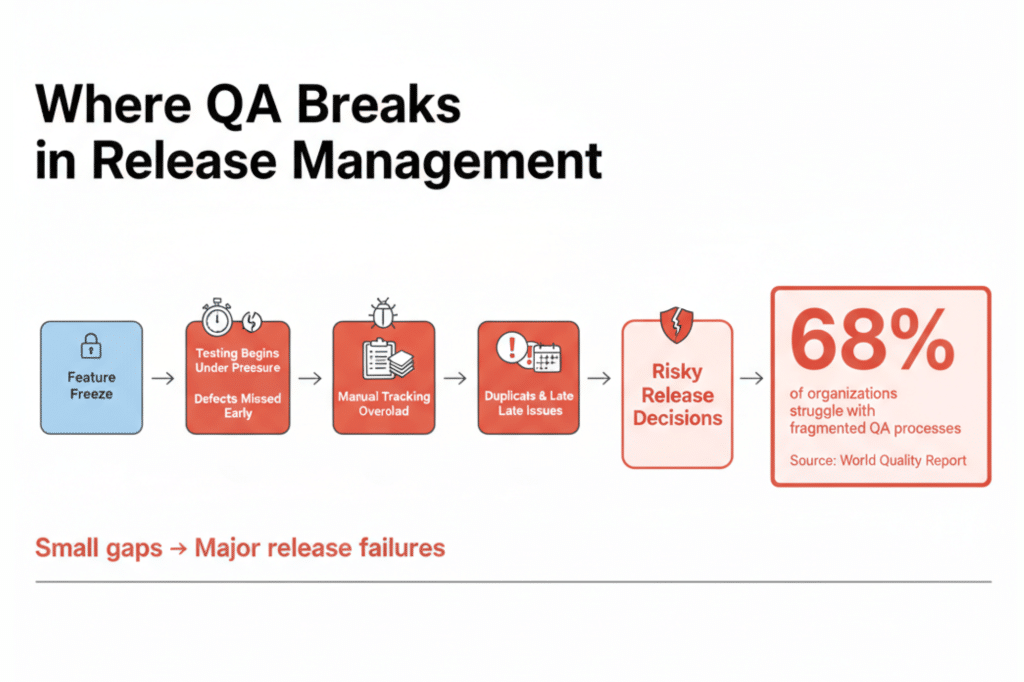
According to the World Quality Report, nearly 68% of organizations struggle with fragmented testing and quality processes. This leads to higher defect leakage into production. Issues are not just missed. They are discovered too late.
So the real problem is not testing alone. It is how defects are tracked, understood and managed across the release cycle.
Key Takeaways
- Defect tracking is not just about logging bugs. It directly impacts release control, cost and overall product quality.
- Most QA failures come from fragmented systems, not a lack of effort. Scattered tools lead to poor visibility and delayed decisions.
- Traceability is critical. Connecting defects to requirements and test cases turns raw data into meaningful insight.
- Centralized visibility improves release outcomes. Teams with real-time insights can reduce delays and make better decisions.
- Integrated QA systems, like Kualitee, outperform traditional tools. They bring structure, reduce manual work, and help teams scale with confidence.
The Problem with Defect Tracking in Release Management
There is no single failure point. Instead, small gaps build up over time and become visible during release.
1. Defects Are Logged, But Not Controlled
Most teams already track defects. They use tools, create tickets, and update statuses.
However, tracking does not mean control.
In many cases, defect management still depends on manual follow-ups. QA teams log issues. Developers fix them. Then someone has to verify, update, and communicate status again. This loop repeats across dozens or even hundreds of defects.
Over time, this creates friction.
Teams spend more time managing defects than understanding them. And as a result, important issues can get delayed or overlooked.
2. It Breaks Under Speed and Scale
As development speeds up, defect tracking struggles to keep up.
Modern systems involve:
- Multiple teams working in parallel
- Continuous code changes
- Frequent releases
Now add scattered defect tracking into that setup.
The result is predictable. Issues are duplicated. Some are missed entirely. Others are discovered too late to fix properly.
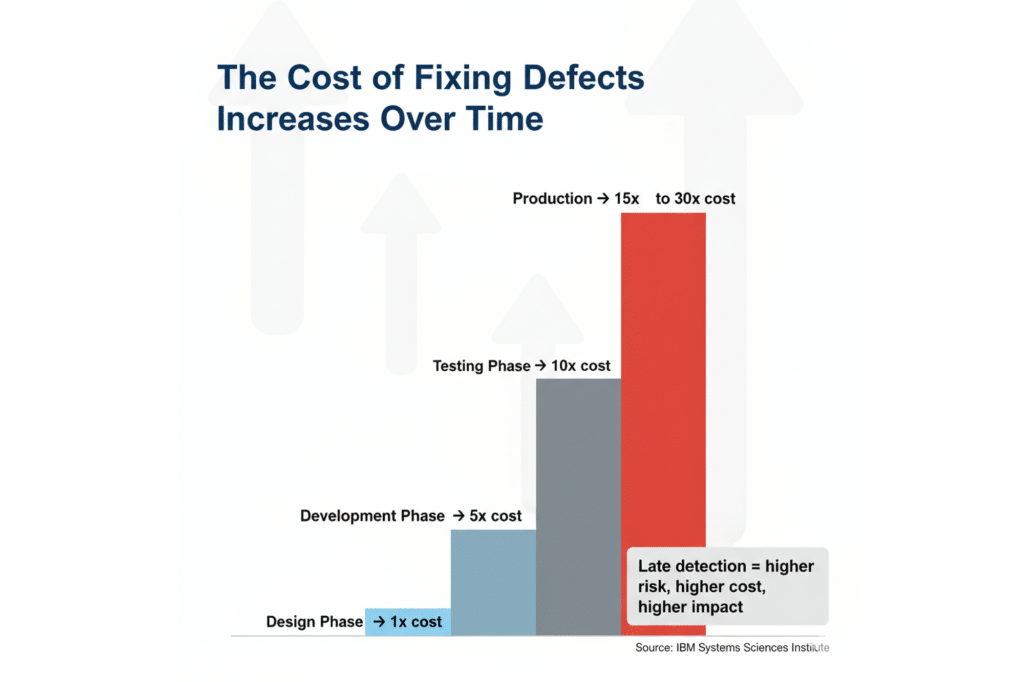
According to IBM, defects found later in the development cycle can cost 15 to 30 times more to fix than those caught early.
So, poor defect tracking does not just slow teams down. It increases risk and cost.
3. Visibility Exists, But It Is Not Reliable
At first glance, most teams appear to have visibility.
They have dashboards, as well as reports and status updates. But the problem is that this information is often scattered.
Defect updates live across different tools and conversations. By the time leadership reviews the data, it is already outdated.
This creates a dangerous situation. Releases move forward based on incomplete or inaccurate information.
And this is where most release failures begin.
What Effective Defect Tracking Should Look Like
Now that the gaps are clear, the next step is to understand what actually works.
Instead of focusing on tools, we need to focus on systems.
A strong defect tracking system does not just log issues. It organizes, connects, and prioritizes them across the entire lifecycle.
In practice, this means defects are not isolated. They are linked to the bigger picture.
1. From Tracking to Structured Control
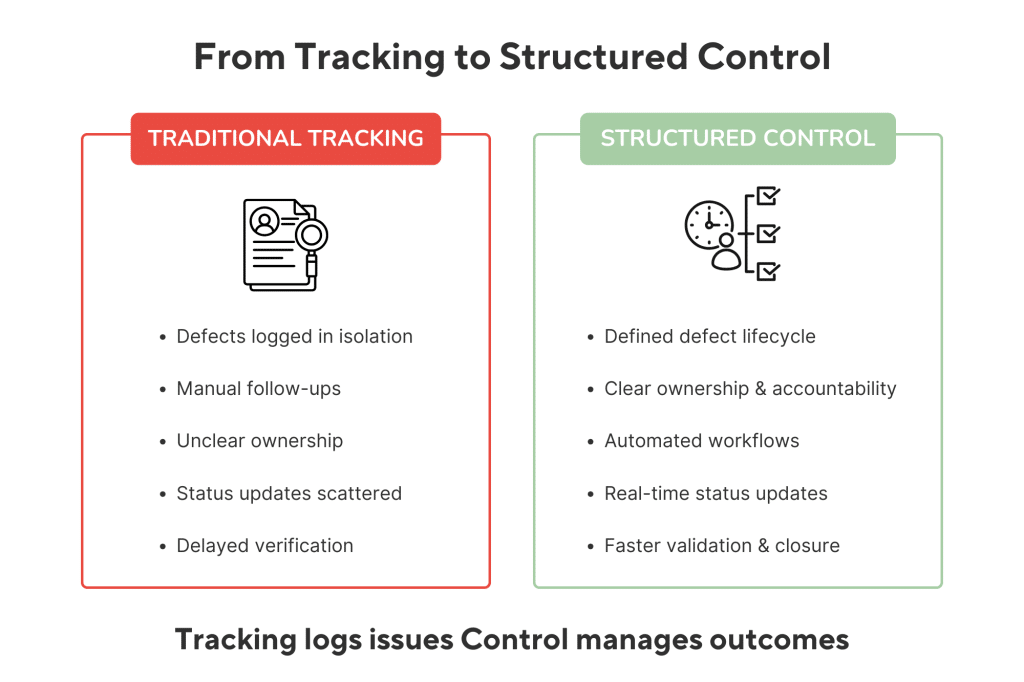
A well-designed system ensures that every defect follows a clear path.
It is identified early, assigned correctly, and validated before moving forward. There is no ambiguity about ownership or status.
This reduces confusion and brings stability to release management.
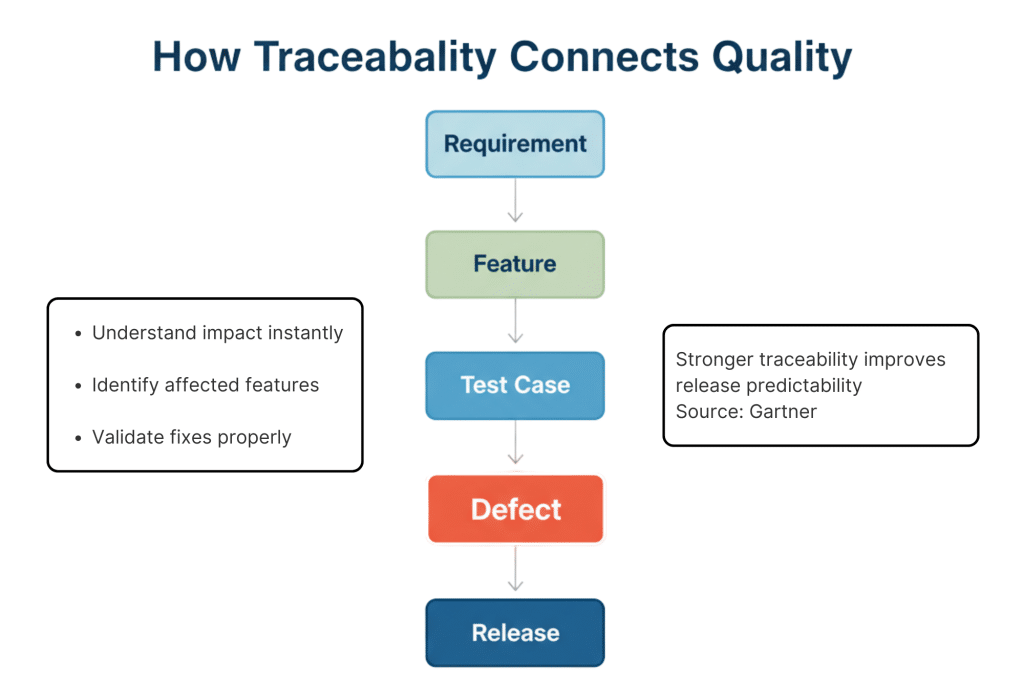
2. From Isolation to Traceability
At this stage, another important layer comes in. Traceability.
A defect is not just a bug. It is connected to a requirement, a feature and ultimately a user experience.
When these connections are missing, teams struggle to understand impact.
However, when traceability is in place, everything changes. Teams can clearly see:
- Which features are affected
- How critical a defect really is
- Whether a fix solves the actual problem
According to Gartner, organizations with strong traceability frameworks see improved release predictability and fewer production issues.
So defect tracking becomes more than a list. It becomes a system of insight.
3. From Data to Visibility
Even with tracking and traceability, one challenge remains. Visibility.
The goal is not just to collect data. It is to make that data usable.
When defect tracking is centralized, teams gain a clear, real-time view of quality. They can track progress, identify risks, and make better release decisions.
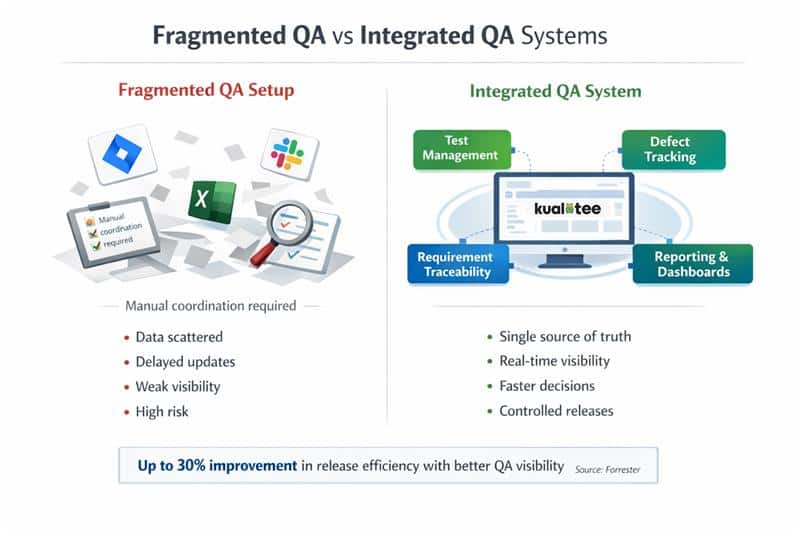
According to Forrester, improved visibility in QA processes can increase release efficiency by up to 30%.
This is where structured platforms start to make a difference.
Teams looking to improve this often explore how integrated systems handle workflows and reporting in one place:
Why Traditional Tools Still Fall Short
Even with improvements, many teams still rely on tools that were not built for modern QA environments.
These tools work well for individual tasks. They can log defects, run tests, and generate reports.
But they do not connect these activities into a single system.
As a result, teams are left doing the integration manually.
Where Legacy Tools Struggle
The limitations are not always obvious at first. But they become clear at scale.
- Defects are managed in isolation
- Testing and tracking are disconnected
- Feedback loops are weak or missing
- Teams rely on manual updates to stay aligned
Because of this, progress slows down.
Teams are constantly reacting instead of working with a clear structure.
The Shift Toward Integrated QA Systems
At this point, the direction becomes clear.
Teams are moving away from fragmented setups toward integrated systems.
Instead of managing multiple tools, they are adopting platforms that bring everything together.
These systems combine:
- Test management
- Defect tracking
- Requirement traceability
- Reporting and insights
Kualitee is built around this idea.
It provides a connected environment where defects are not just tracked, but understood in context.
This reduces complexity and improves decision-making across the release cycle. So, check it out.
The Business Impact of Strong Defect Tracking
Now let’s connect this to what really matters. Business outcomes.
Defect tracking is not just a QA concern. It directly affects cost, timelines, and customer experience.
When defect tracking is weak, the impact spreads quickly.
Releases get delayed. Teams spend more time fixing issues. Customers experience bugs. Trust begins to drop.
Why Early Detection Changes Everything
The numbers here are hard to ignore.
Fixing defects in production can cost significantly more than fixing them during development. In many cases, the difference is up to 30 times higher, according to IBM.
But beyond cost, the real impact is long-term:
- Poor releases lead to customer churn
- Repeated issues damage brand reputation
- Teams lose time on rework instead of innovation
This is why defect tracking should be treated as a strategic function. Not just an operational one.
What Improves with a Structured Approach
When defect tracking is done properly, the benefits are clear.
Teams move faster. Releases become more predictable. And quality improves without adding unnecessary overhead.
Over time, organizations start to see:
- Fewer production defects
- Better alignment across teams
- Faster debugging and resolution
- More confident release decisions
This is what separates teams that struggle from those that scale effectively.
Conclusion and Next Steps
Defect tracking has changed.
It is no longer just about logging bugs. It defines how well teams manage quality under pressure.
Teams that rely on disconnected tools often stay in reactive mode. They fix issues as they appear, but never fully control them.
On the other hand, teams that adopt structured systems, like Kualitee, operate differently. They gain visibility, reduce risk, and release with confidence.
If you are looking to improve your release process and bring more control into your QA workflows, it is worth exploring how modern platforms approach this problem:
Because at scale, quality is not just tested. It is managed.
Frequently Asked Questions (FAQs)
Q1. How does defect tracking improve release management efficiency?
It gives teams a clear view of all issues before release. Defects are tracked, prioritized, and resolved early, which reduces delays and avoids last-minute surprises.
Q2. What is the difference between defect tracking and test management?
Defect tracking focuses on bugs and fixes. Test management handles the planning and execution of tests. Together, they connect defects to test cases and improve overall QA flow.
Q3. Why is requirement traceability important in defect tracking?
It links defects to business requirements. This helps teams understand impact, prioritize correctly, and ensure fixes actually solve the right problem.
Q4. How can QA teams reduce defect leakage in production?
By tracking defects centrally, linking them to tests, and fixing high-risk issues early. Better visibility and continuous validation reduce issues reaching production.